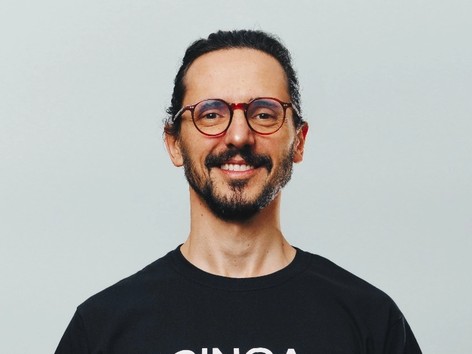

By Pedro Del Priore, Founding Partner and CEO of Ginga
For decades, brand value was measured almost exclusively by financial indicators and short-term metrics. Growth, reach, market share, and profitability were treated as ends in themselves. This model worked for a while; today, it shows clear signs of exhaustion. In a world marked by successive social, environmental, cultural, and economic crises, creating value now requires a broader and more integrated vision.
Market data itself points to this transition. According to the Edelman Trust Barometer, about 64% of people choose, switch, or avoid brands based on their beliefs and values. Purchasing decisions are no longer purely transactional; they now incorporate criteria such as social positioning, environmental impact, and institutional consistency. Value, therefore, extends beyond operational efficiency to be rooted in perceived legitimacy.
What is at stake is not just how much a brand grows, but how it grows and what sustains that trajectory over time. In this new context, value ceases to be one-dimensional and becomes systemic. It manifests itself in a business’s ability to generate financial results while strengthening relationships, preserving cultural relevance, and nurturing the vitality of the ecosystems of which it is a part.
This perception of expanded value also extends to the fields of investment and talent. According to the PwC Global Investor Survey, about 71% of investors say that companies should incorporate ESG and sustainability directly into their corporate strategy. Similarly, 62% of Gen Z and 59% of millennials research a brand’s ethical and environmental stance before accepting a job or purchasing its products, according to the Deloitte Global Gen Z and Millennial Survey. Value has become a cross-cutting criterion that simultaneously spans consumption, investments, culture, and talent attraction and retention.
Broadening the understanding of what value means within organizations requires moving away from isolated solutions and superficial narratives of purpose. Brands that operate in a regenerative manner understand that business, culture, society, and the environment are interdependent. There are no boundaries between communication, operations, and impact. Every decision—from positioning to production methods, and from internal to external relationships—has ripple effects throughout the system as a whole.
Creating value, at its core, is therefore an exercise in consistency. It means aligning words with actions, intention with delivery, and efficiency with humanity. It means repositioning profit as a consequence of healthy relationships, consistent strategies, and a long-term vision. Studies by the Boston Consulting Group indicate that companies that balance financial performance with social and environmental impact can achieve a total shareholder return that is up to 11 percentage points higher over a five-year period compared to those that treat sustainability as a peripheral initiative. Financial results, when supported by solid foundations, tend to be more consistent.
This systemic view also redefines the concept of impact. Rather than one-off actions or isolated campaigns, value is now built in a continuous, cumulative, and distributed manner. Each project becomes an opportunity to strengthen ties, foster collective learning, and enhance the vitality of the ecosystem.
Faster value growth and greater long-term value retention are characteristics of brands perceived as “meaningfully different,” according to Kantar BrandZ’s Most Valuable Global Brands; those that expanded their regenerative differentiation had, on average, a 19% advantage in brand valuation growth compared to what was expected for their categories. This evidence suggests that cultural transformation and financial performance go hand in hand. The result is more resilient brands, capable of navigating cycles of change without losing relevance or legitimacy.
In a market in constant flux, what truly sets a brand apart goes beyond simply doing more and doing it faster. It lies in doing it better—with depth, awareness, and consistency—and creating value that stands the test of time. Because brands that see value as their essence don’t just grow—they endure.
Heading 1
Heading 2

Heading 3
Heading 4
Heading 5
Heading 6
Lorem ipsum dolor sit amet, consectetur adipiscing elit, sed do eiusmod tempor incididunt ut labore et dolore magna aliqua. For we have no excuse, since our work is not merely a matter of routine; rather, it is a source of comfort and fulfillment. Thus, we embrace this work with joy, knowing that it brings us peace and fulfillment.
Block quote
Bulleted list
- Item 1
- Item 2
- Item 3
Unordered list
- Item A
- Item B
- Item C
Bold text
Emphasis
Superscript
Subscript