.png)
About the article
After growing 30% annually and generating R$45 million in revenue in 2025, the São Paulo-based agency is betting on expanding outside São Paulo, rebranding, and focusing on large companies to scale its revenue.
To celebrate its 24-year history, Ginga launched its first brand repositioning. The rebranding, unveiled this April, marks the beginning of a new phase for the advertising agency and aims to more clearly convey the worldview the company has been building.
The change comes at a time of strong growth. Over the past five years, Ginga has grown, on average, 30% per year. In 2025, it made the EXAME “Businesses on the Rise” ranking thanks to the previous year’s results, when the agency’s net operating revenue reached R$ 28.76 million. The pace of growth continued, and the company ended last year with revenue of R$ 45 million. Now, the goal is even more ambitious: to reach R$ 70 million in revenue by 2029.
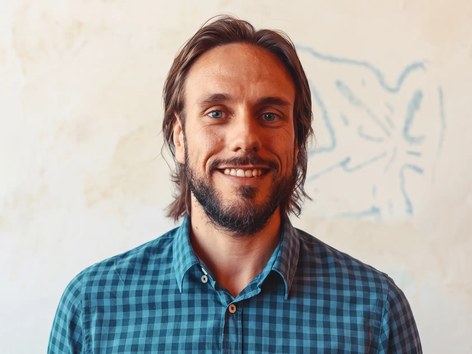
The rebranding goes far beyond a mere aesthetic change. According to Ginga’s CEO, Pedro Del Priore, focusing on the agency’s essence, culture, and worldview helps the market understand more clearly what the company does and how it operates, in addition to attracting clients and employees who are more culturally aligned.
Ginga was founded in 2002 by Pedro Del Priore, Paulo Martinez, and Marcos Brabo as a digital agency. Over the past two decades, the company has kept pace with changes in technology, consumer behavior, and the market, and today it defines itself as a full-service agency.
"Our main role is to help brands develop a modern advertising strategy," says Del Priore. To that end, the company brings together areas such as brand positioning, strategy, content production, audiovisual, creativity, and data analytics—the latter focused on better understanding the audience and guiding decision-making.
This combination sets the company apart from the traditional agency model, with less emphasis on execution alone and more on strategy, creativity, planning, and the development of tailored solutions.
Based on this, Ginga realized that it makes more sense to focus its efforts on a market with which it has a greater affinity: that of medium and large companies. “These are companies that already have more mature communication structures,” he points out.
Currently, the agency works with eight clients, and its key partners include brands such as Mercado Livre, Kopenhagen, Hering, Orfeu, Even, Friboi, Maturatta, and Sistema Ailos.
"Collaboration"
Ginga’s success is also evident in the way it organizes its operations. The agency has more than 150 employees, nearly 40% of whom are based outside São Paulo, and a network of more than 700 people in Brazil and abroad. The company maintains an office on Faria Lima Street but operates remotely. This model, adopted more extensively after the pandemic, has made it possible to broaden the diversity of talent, create a more horizontal structure, and offer professionals greater autonomy.
"We joke that Brazil isn't 011—it's +55. Brazil has regions that are incredibly rich, not just financially, but culturally as well," he says.
This idea became one of the central concepts of the agency’s new phase. Dubbed “collabority,” the term was coined by Ginga itself to capture the combination of collaboration, diversity of repertoire, and strategic intelligence. But the CEO says that collabority isn’t limited to the company’s employees. It’s also part of how Ginga interacts with the brands it serves.
That’s how the UmDois methodology came about—a kind of collaborative sprint that brings together the client, the agency, and, in some cases, guest experts, over a period ranging from one week to ten days. The goal is to solve a specific challenge quickly and thoroughly.
"This process strengthens the connection between teams, reduces noise, and allows solutions to emerge more consistently."
Positive impact
But the point Del Priore emphasized most regarding Ginga’s repositioning is the company’s focus, over the past five years, on social and environmental impact. The executive avoids using the term “ESG” because he believes it has become overused, but he affirms that a commitment to sustainability is part of the agency’s core identity.
In his view, brands and companies have enormous influence over society and can help transform behavior. That is why Ginga has been investing in more responsible practices, focusing not only on internal issues but also on the types of projects it delivers to clients.
"The idea is to develop projects that have a positive impact on the world, without neglecting profitability and business objectives," he explains.
In addition, the agency’s partners and directors completed training in regenerative economics at Gaia Education, based in Scotland. Ginga has also signed the UN Global Compact, considered the world’s largest corporate sustainability initiative, and in April received certification from Sistema B, a global group that brings together companies committed to social and environmental impact. According to Del Priore, this certification carries weight because it requires constant reviews and prevents sustainability from being treated merely as rhetoric.
"We want to work with companies that are genuinely committed to making a positive impact on the world. We are aligning our life purpose with our financial purpose."
Ginga’s organizational structure follows this collaborative approach. The group—which includes Marcelo Aquilino, Thomas Rebergue, Lais Araújo, Karen Mendes, Fernanda Fontes, David Galasse, and Francine Azevedo—shares a similar worldview and embodies the agency’s collective development.
"They are professionals whom we greatly admire and are proud of," he emphasizes.
AI in Operations
Regarding artificial intelligence, Del Priore explains that the technology is already present in virtually all areas of Ginga, but is always accompanied by governance and ethical guidelines. With this in mind, the company developed the AI Academy, an initiative aimed at training employees to use these tools responsibly in areas such as creative work, art direction, video, planning, and copywriting.
"There's no point in buying technology and thinking that it will give you a competitive advantage. It has to be accompanied by a culture of responsibility," he says.
Heading 1
Heading 2
Heading 3
Heading 4
Heading 5
Heading 6
Lorem ipsum dolor sit amet, consectetur adipiscing elit, sed do eiusmod tempor incididunt ut labore et dolore magna aliqua. For we have no excuse, since our work is not merely a matter of routine; rather, it is a source of comfort and fulfillment. Thus, we embrace this work with joy, knowing that it brings us peace and fulfillment.
Block quote
Bulleted list
- Item 1
- Item 2
- Item 3
Unordered list
- Item A
- Item B
- Item C
Bold text
Emphasis
Superscript
Subscript