.jpg)
About the article
Repertoire diversity, structured collaboration, and cultural intelligence as a business framework—not merely as a statement of values.
There is a question that has been quietly circulating in the Brazilian communications industry for at least a decade: Is it possible to build a relevant, financially sound, and culturally committed agency without sacrificing independence? GINGA, founded in São Paulo by Pedro Del Priore and Paulo Martinez, is one of the most articulate answers to this question—and the numbers back up that claim. As it celebrated its 24th anniversary, the agency closed out 2025 with R$45 million in revenue, averaging 30% annual growth over the past half-decade—without a foreign partner, without an investment fund, and without compromising the principles on which it was founded. It is not presenting a repositioning. It is presenting a formalization—what it calls “collabority”—of something it had already been practicing out of conviction long before the market realized it was necessary.
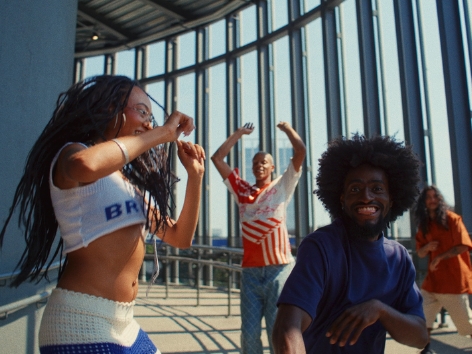
The thesis is simple in its formulation but demanding in its execution: diversity is not a decorative attribute, but rather a productive infrastructure. In a Brazil that celebrates its cultural mix as a postcard image but rarely incorporates it as a working method, the agency has built a network of more than 700 professionals spread across the country and abroad, recruited not for geographic proximity or uniformity of training, but for their ability to generate high-quality creative friction. The more diverse the backgrounds of those working together, the richer the synthesis delivered to the client. This is the grammar of GINGA.
The model has a name: applied cultural intelligence. It means interpreting the many facets of Brazil with the same precision as one would analyze market data—and translating that understanding into strategy and execution. A briefing for a popular consumer brand might be handled by a team that includes a strategist from Belém, an art director from Salvador, a planner from Rio de Janeiro, and a producer from São Paulo. Diversity, in this case, is not an internal policy: it is a method. And the method has measurable financial consequences. The study *Diversity Wins* by McKinsey & Company (2020) demonstrated that companies in the top quartile for ethnic diversity are 36% more likely to achieve financial returns above their industry average. GINGA does not cite this data—the agency’s track record serves as evidence.
The client roster built up over 24 years confirms the soundness of this approach. Mercado Livre, Kopenhagen, Burger King, Friboi, Polenghi, FGV, Sagatiba—distinct sectors, audiences, and positioning strategies that differ greatly from one another. What unites them is their willingness to accept that cultural communication requires relinquishing some control over the narrative. GINGA does not produce campaigns in the conventional sense. It produces cultural agents: brands that not only communicate but actively participate in the times in which they live. In today’s fast-paced cultural cycles—where movements emerge and fade within days—continuously integrating strategy, creativity, and production is no longer a competitive advantage but has become a prerequisite for survival.
This integration operates on three simultaneous levels. The first is creative: more diverse teams are up to 70% more likely to capture new markets, and 76% of companies with high cultural diversity make more effective decisions in less time, according to McKinsey data. The second is operational: speed isn’t about rushing—it’s the ability to turn a concept into a deliverable without losing depth. Teams that understand the client’s business deeply enough to anticipate demands and identify cultural cues only function effectively when there is a culture of genuine creativity, not mass production. The third is relational: the difference between an audience and a community.
This distinction is backed by consistent empirical evidence. A mere 5% increase in customer retention can boost profitability by up to 95%. The Sprout Social Index shows that 91% of consumers view social media as a space for connection—and 76% expect brands to foster that space in a genuine way. The Edelman Trust Barometer confirms this: 57% of people begin to avoid brands with which they have a negative association. An audience is a number; a community is a bond. Building a community is more like cultivating than planting—it’s less about shining every now and then, and more about being present every day.
The experimental aspect of GINGA’s journey is equally revealing. In 2022, the agency pioneered the creation of a DAO (Decentralized Autonomous Organization) applied to marketing—Gira.DAO—with 150 professionals participating at different levels in decision-making via blockchain. The initiative signaled a direction before the market had even named it: more fluid, more pluralistic, and more distributed structures. The partners also launched SIGNA, a branding and strategic design consultancy, and joined Purpy, a global regeneration consultancy that works on the transition from extractive models to regenerative business ecosystems. The arc is clear: from a creative agency to an ecosystem of cultural and economic transformation.
The expansion of the company’s leadership team in 2024 follows the same logic. By bringing Fernanda Fontes (CCO), Karen Mendes (CFO), Francine Azevedo (audiovisual production), Laís Araújo (people and culture), David Galasse (design), and Thomas Rebergue (new business) into the company, the agency did not merely distribute equity—it distributed governance. In an industry where the concentration of power in the hands of a few founding partners is still the norm, decentralization was chosen as a strategy for sustainability. Data from the Corporate Productivity Institute indicate that 83% of companies with distributed work models report high productivity—and this is no coincidence: decentralized networks are, above all, adaptive, reorganizing themselves according to the needs of each project, without relying on hierarchy to respond.
The long-term value of all this cannot be measured solely in terms of revenue. The Edelman Trust Barometer shows that 64% of people choose brands based on beliefs and values. Kantar BrandZ confirms that brands with high cultural significance outperform others in market value by 19%. And the Reuters Digital News Report notes that 40% of people already actively avoid the news—in an ecosystem saturated with stimuli, communication that doesn’t build connections achieves nothing. Creating value, at its core, is an exercise in consistency: aligning words with actions, intention with delivery, and efficiency with humanity. A business’s ability to generate results becomes a direct function of its ability to strengthen relationships and nurture the ecosystems of which it is a part.
“Colaboridade,” therefore, is not a concept created for an anniversary. It is the name GINGA has given to what it has always been: an organization that understood—before most others did—that Brazil is far too diverse to be represented by homogeneous agencies. That creativity without diversity of repertoire is creativity in a closed loop. That collaboration without structure is chaos, and structure without collaboration is bureaucracy. That communicating well—in a world where brands are held accountable for what they do and how they build what they do—requires that the agency itself be made up of diverse voices. Twenty-four years of experience suggest that this was the right bet. The answer, it seems, was always embedded in the name.
Heading 1
Heading 2
Heading 3
Heading 4
Heading 5
Heading 6
Lorem ipsum dolor sit amet, consectetur adipiscing elit, sed do eiusmod tempor incididunt ut labore et dolore magna aliqua. For we have no excuse, since our work is not merely a matter of routine; rather, it is a source of comfort and fulfillment. Thus, we embrace this work with joy, knowing that it brings us peace and fulfillment.
Block quote
Bulleted list
- Item 1
- Item 2
- Item 3
Unordered list
- Item A
- Item B
- Item C
Bold text
Emphasis
Superscript
Subscript